Green tea, black tea, white tea, oolong, pu-erh & tisanes!
Jan 13, 2026
This essay explores tea, tisanes, blended teas, scented teas, Chai tea, the parts of the tea plant, caffeine, brewing methods, and how different materials shape flavor and experience.
What Is Tea?
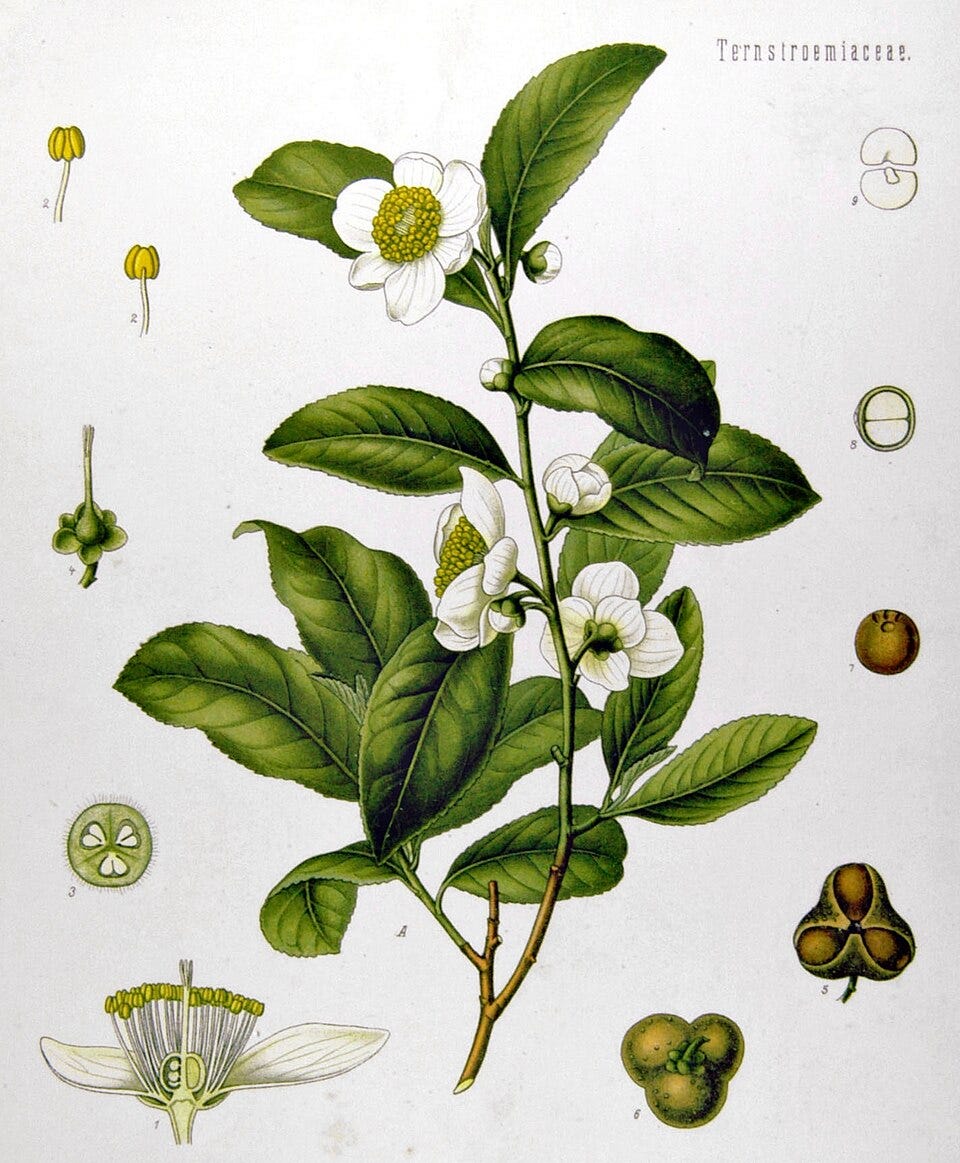
Tea is a beverage made by infusing the leaves of a single tea plant, in hot water. Green tea, black tea, white tea, oolong, pu-erh — despite their very different flavors, aromas, and brewing styles — all come from a single species: Camellia sinensis.
While the entire tea plant can be used in different ways — buds, leaves, stems, flowers, and even seeds — most tea is made from the buds and leaves.
Which leaves are used, how many are included, and where they sit on the plant change everything about how the tea tastes, feels, and ages.
Younger leaves tend to be sweeter, softer, and more aromatic
Older leaves are stronger, more bitter, and more durable
Stems contribute sweetness and balance
Mature leaves provide structure and aging potential
For now, let’s focus only on the tea plant’s leaves.What changes from tea to tea is not the plant, but how the leaves are treated after they are picked.
Tea leaves contain a specific and powerful set of naturally occurring compounds: caffeine, polyphenols, amino acids, and aromatic oils. These compounds are responsible for how tea extracts in water, how it changes over time, and why different teas behave so differently even when brewed the same way.
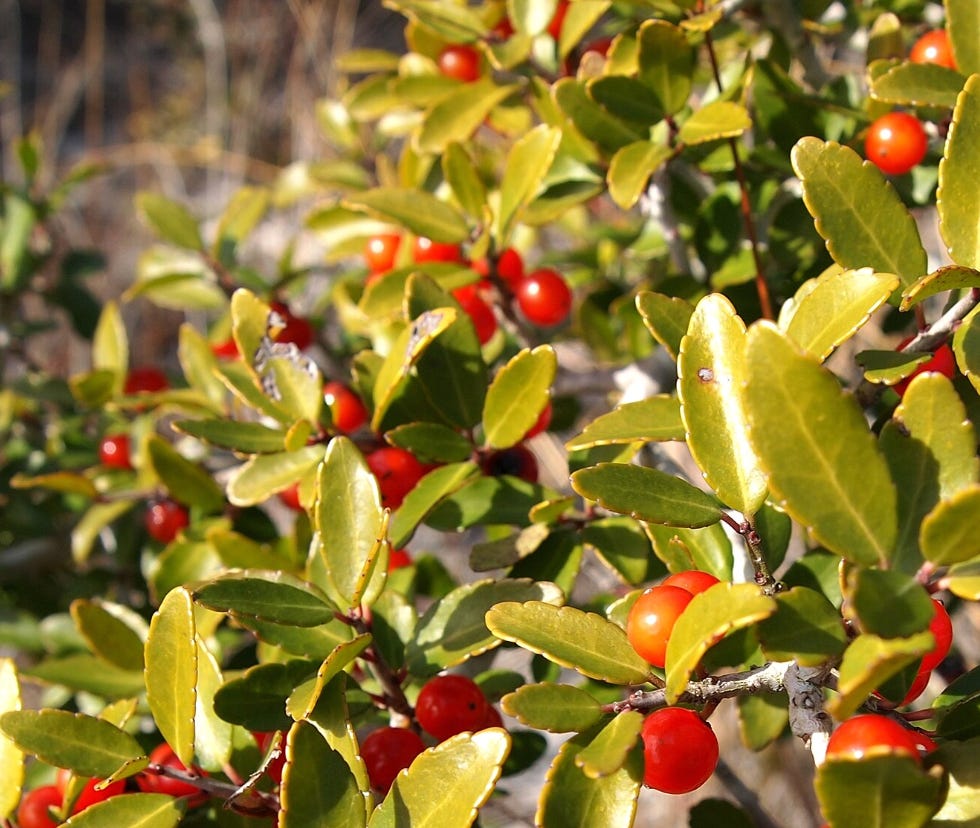
Quick note: not all caffeinated infusions come from Camellia sinensis. In North America, Yaupon holly has a long history as a traditional caffeinated plant, especially among Indigenous peoples of the Southeast. It’s botanically unrelated to the tea plant, but contains naturally occurring caffeine and behaves very differently in water—less tannic, and often gentler on the body.
I’ll be exploring yaupon and other regional tea plants in future writings, especially how different species shape flavor, ritual, and our relationship to caffeine.
Once tea leaves are picked, enzymes inside the leaf begin reacting with oxygen in the air. This chemical reaction, called oxidation, changes both flavor and color.
Different tea styles are defined by how much oxidation is allowed to happen:
Green tea is heated quickly to stop oxidation, preserving grassy, vegetal notes.
Black tea is fully oxidized, creating darker color and stronger tannins.
Oolong tea falls somewhere in between, with partial oxidation that produces a wide range of aromas.
White tea is minimally processed, relying more on gentle drying and time than intervention.
Pu-erh and other dark teas undergo microbial fermentation, sometimes over many years.
Quick note on bitterness: Polyphenols and tannins protect the leaves from insects and environmental stress. When we make tea, we extract those same compounds. Bitterness and astringency are not flaws — they are natural features of the plant.
From a brewing standpoint, this matters:
Caffeine and aroma extract relatively quickly.
Tannins and other bitter compounds increase with time.
Hotter water accelerates extraction, but time controls balance.
This is why some teas will always have an edge, no matter how carefully they are brewed. In many tea traditions, this bitterness is intentional and valued. It’s grounding, clarifying, and stimulating.
And then, there are Tisanes, which are infusionsordecoctions of leaves, flowers, roots, seeds, bark, or fungi. They are most often referred to as herb teas or herbal tea.
A decoction is a method of extracting herbs in water, by simmering them over the stove for a period of time. Compared to a tea or infusion, this method of extraction is a little more intensive, suitable to extract medicinal parts out of harder, woodier herbs and herb parts.
An herbal infusion is a concentrated method of brewing dried or fresh herbs in water. They can be brewed for anywhere from 2 minutes to 4 hours to overnight (time really depends on the intended end result) in a large jar or teapot, or mug, often covered with a lid to enhance the nourishment. Infusions are a wonderful way to increase the vitamin and mineral content of your diet and obtain therapeutic doses of medicinal herbs. My special winter decompression blend, The Warm Pause, is “technically” a tisane and contains rooibos, lemon balm, spearmint and ginger. Tisanes are comprised of many different compounds, extract differently in water, and interact with the body in different ways.
Beverages actually created from tea and combined with material from other plants are known as "blended teas", "scented teas", or "flavored teas". Examples include jasmine tea, genmaicha, and Earl Grey tea. Unlike true teas, most tisanes do not naturally contain caffeine (though tea can be decaffeinated) -via Wikipedia
Herbs traditionally used for infusions are usually leafy plants chosen for their safety and nutritional value. These plants extract well in hot water and often contain minerals, flavonoids, and other water-soluble compounds. Common examples include nettle (Urtica dioica), oat straw (Avena sativa), red clover (Trifolium pratense), calendula (Calendula officinalis), dandelion leaf (Taraxacum officinale), lemon balm (Melissa officinalis), raspberry leaf (Rubus idaeus), chamomile (Matricaria chamomilla), and plantain (Plantago spp.).
Tea is endlessly adaptable. From a single plant, and from many others beyond it, we get an extraordinary range of flavors, structures, and experiences. That flexibility is what allows tea to meet us in different moments — for focus, for health, for rest, for warmth, for curiosity.
Much of my own work centers on blended teas and tisanes, where leaf choice, proportion, and steep time shape the final cup just as much as the plant itself. Blending is its own kind of literacy. Blending tea is where botany, chemistry, tradition, magic and taste intersect.
In future writings, I’ll be sharing more about how I build blends, why certain plants work better together, and how to brew them with confidence at home. I’ll also be sharing recipes and, from time to time, opportunities to try these teas for yourself.
If you’d like to follow along — and be first to taste what I’m working on — you’re welcome here!
This Substack is reader-supported. To receive new posts and support my work, consider becoming a free or paid subscriber.
Tea has been cultivated and standardized for thousands of years. Tisanes developed through folk and domestic traditions. The word “tea” is a linguistic outlier. Nearly all languages use a variation of te or cha, reflecting ancient trade routes…
Ok, but…What Is Chai tea? A Tisane? A Tea?
In much of India, the word chai simply means tea. When people say chai, they are usually referring to masala chai: black tea brewed with milk, spices, and sugar. It’s not a separate type of tea plant, and it’s not an herbal infusion.
Chai is a blended tea in the sense that it combines Camellia sinensis (black tea) with other plant materials such as ginger, cardamom, cinnamon, cloves, and/or black pepper.
More specifically, it’s typically made with strong, fully oxidized black tea (often Assam), chosen for its ability to hold structure when boiled with milk and spices. On its own, that tea would taste sharp and tannic. In chai, that strength is intentional. While traveling in India, I was struck by how often chai was served in small, unglazed terracotta cups — simple, earthy, and beautiful. After drinking, the cups were often thrown to the ground or pitched into trash cans and shattered.
Unglazed clay is porous. It absorbs a small amount of liquid and aroma, subtly altering the flavor of what’s poured into it. When chai is served in terracotta, the clay tempers the heat and adds a faint mineral quality that complements the spices and milk.
The cups are single-use not out of disregard, but because the clay absorbs the drink and cannot be fully cleaned or reused safely. They are meant to return to the earth!
It is clearly tea — made from Camellia sinensis. It is clearly blended — combined with other plants for balance and warmth. And it is culturally specific — shaped by climate, tradition, and daily life.
Understanding chai helps clarify the difference between tea as a plant and tea as a practice. It’s a reminder that tea has always been adaptive! The same plant, the same leaves, shaped by different hearts and hands, traditions, and needs.
As I continue exploring blended teas and tisanes, I’ll be sharing more about how I build flavor, choose plants, and how I like to think about brewing as a practice, ceremony and ritual when making the perfect cup of tea.
If you’d ever like the chance to taste these teas for yourself alongside the writing, I hope you’ll stay connected.